Buried in the Headline
by Rhonda Kanet Chambless
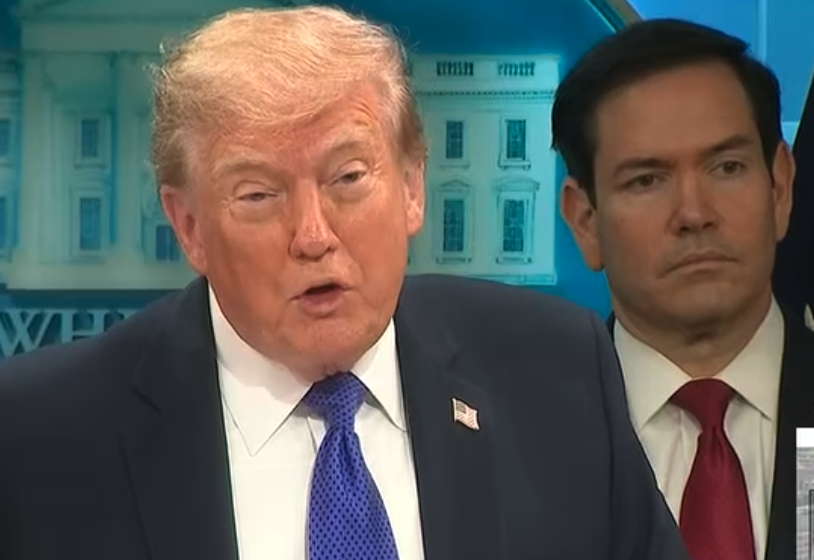
President Trump’s Press Conference of November 20, 2026
“Come January 1, 2027, the groundwork for an entirely new American economic era will be taking shape.” I personally believe this is accurate. Note that he says the groundwork will begin.
I vetted the claims below. Here is what I found.
The Philippines
The claim: Trump announced that 100% of the Philippines’ agricultural and energy purchases would come from the United States, pulling away from Middle Eastern suppliers.
What I found: The published agreement refers to increasing purchases to eliminate the bilateral trade deficit. It does not explicitly guarantee 100% sourcing, but the meaning is the same: Middle Eastern suppliers are out. This is overwhelmingly significant.
- Market size: The Philippines has 117 million people, one of the world’s largest consumer markets. The average person doesn’t realize this.
- Agriculture: The Philippines Statistics Authority validates that the country imports $20.37 billion in agricultural products each year. U.S. farmers will gain an unprecedented, large, recurring export market for wheat, soybeans, corn, meat and other products. This should be a national headline.
- Energy: The same authority stated the Philippines will import over $22 billion in oil, natural gas and coal in 2026. The significant detail is that it now imports 98% of its crude oil from the Middle East. This deal makes that arrangement begin to disappear, fast.
- $17 billion + in commercial deals: These include a Philippine Airlines purchase of 20 brand-new Boeing 787 Dreamliners with GE engines, supporting an estimated 47,000 American jobs.
Thailand
President Trump said Thailand agreed to eliminate tariffs on American products and to purchase $2.6 billion in American agricultural products every year. The United States Trade Office validated the $2.6 billion purchase agreement and stated that tariffs will be reciprocal.
How Did Trump Accomplish This?
The Philippines and Thailand occupy strategically important positions in the South China Sea, where American and Chinese interests intersect. They need guaranteed American protection. Given what that protection costs American taxpayers, these are reasonable deals.
A Model for Other Security Partners
I see this as the negotiating model for American energy and agricultural exports to Japan, South Korea, Taiwan and other U.S. security partners in the Asia-Pacific region. American taxpayers have funded their military protection against aggressive Chinese action for over 70 years.
This raises a question: could the United States use these longstanding security relationships to negotiate substantially larger purchases of American agricultural products, oil, natural gas and manufactured goods from the countries we pay to protect?
- Defense treaties do not require allies to purchase American commodities, though such a requirement arguably should have been included.
- It makes sense, because revenue is needed to support the enormous cost of protection.
- These countries must buy from somewhere. Why not from the very people who protect them?
- Japan and South Korea are especially interesting because both are enormous energy importers.
Conclusion
So, move aside, China. In my opinion America will be the largest supplier to the free world, as well as the beacon of freedom to all countries that value liberty.